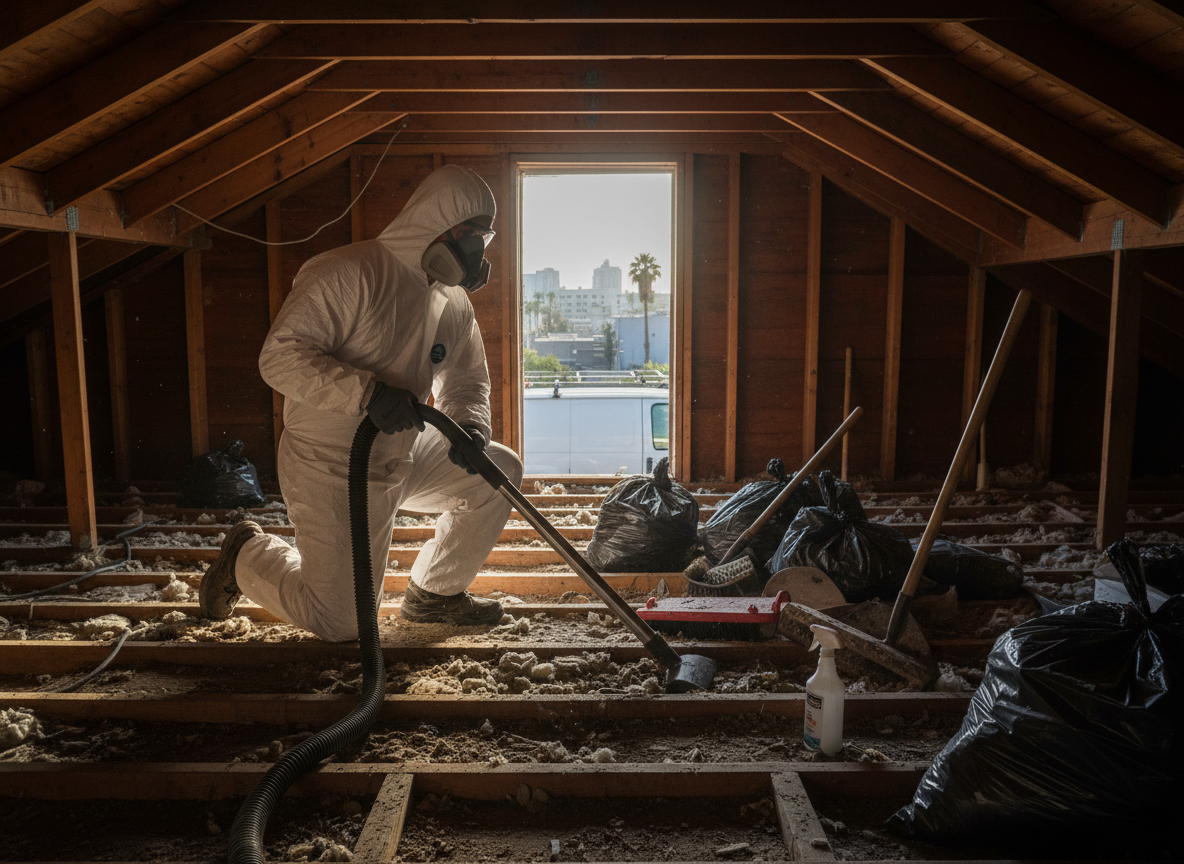
Rodent cleanup is biohazard remediation, not housekeeping. Rodent urine, droppings and nesting material can carry hantavirus, leptospirosis, salmonellosis, lymphocytic choriomeningitis and rat-bite fever. The primary transmission risk in a cleanup is aerosolization: dry sweeping or vacuuming droppings launches particles into the breathing zone, which is exactly how hantavirus pulmonary syndrome exposure occurs in enclosed spaces such as attics, crawl spaces, sheds and cabins. Public health guidance is consistent on this point. Contaminated areas are ventilated first, then misted with disinfectant, then removed wet, never dry swept and never vacuumed with a standard household vacuum.
The correct sequence matters more than the products used. Ventilate the space for at least thirty minutes before entering. Wear respiratory protection and non-porous gloves. Mist all droppings, nesting material and contaminated surfaces with a disinfectant solution and allow adequate contact time rather than wiping immediately. Remove the saturated material wet, bagged and double-bagged. Disinfect the underlying surface. Only then consider HEPA filtration for residual particulate. This order is what separates a remediation from a cleanup that spreads the contamination further.
Attic decontamination is the most common rodent cleanup job in California housing. Blown-in or batt insulation that has been used as nesting material becomes urine-saturated, compressed and matted, which destroys its R-value and holds pheromone residue that actively attracts new rodents into the same space. Removal is done by vacuum extraction into sealed containment, followed by disinfection of the joists, ceiling deck and any exposed framing, then treatment for ectoparasites, then replacement insulation installed to the appropriate R-value for the climate zone. Spot cleaning is appropriate for light localized contamination; full removal and replacement is warranted when saturation is widespread or odor persists.
Crawl space cleanup follows a similar path with different variables. Droppings and nesting material sit on the vapor barrier and the ground beneath, and rodent activity commonly damages both the barrier and the underfloor insulation and ductwork. Contaminated barrier is removed and replaced rather than cleaned, chewed duct sections are identified for repair, and the ground surface is treated. Ectoparasite treatment matters here because fleas and rat mites persist in the substrate after the rodents are gone and will migrate upward into living space.
Cleanup without exclusion is money spent twice. Contaminated material is removed, the space is disinfected, new insulation goes in, and if the roofline gap or the unscreened crawl space vent is still open, the same rodents recontaminate the same space within weeks, drawn back by residual scent trails. Every cleanup job we perform includes confirming that the entry points are identified and sealed, either as part of the same scope or as a documented prerequisite before the cleanup proceeds.
Technician insight
The most dangerous thing a homeowner can do after a rodent infestation is grab a shop vacuum and a broom and go into the attic. That is the exact scenario in which hantavirus exposure occurs. Dry disturbance in an enclosed, poorly ventilated space with accumulated droppings puts everything into the air you are breathing, and a standard vacuum blows the fine particulate straight back out through the exhaust. Ventilate the space first, mist everything with disinfectant, let it sit, then remove it wet. The other frequent error is replacing attic insulation before the entry points are sealed. New insulation in an unsealed attic is simply fresh nesting material with better R-value.
Attic remediation after a long-running roof rat infestation
A property had roof rat activity for an estimated two years before treatment. After trapping and exclusion were completed, the attic assessment found droppings across roughly six hundred square feet, with heavy urine saturation and matted nesting compression concentrated near the gable end. The insulation had lost most of its effective R-value. Work involved isolating the attic hatch, ventilating for thirty minutes, pre-misting the entire contaminated area with disinfectant, vacuum extracting the insulation into sealed containment bags, disinfecting the joists and ceiling deck, treating enzymatically for urine residue and pheromone trails, treating for rat mites, and installing replacement blown-in insulation to code R-value. The homeowner reported the persistent odor in the upstairs hallway, which they had assumed was a plumbing issue, disappeared entirely.
Rodent Cleanup Services We Offer
✓Attic Decontamination and Insulation Replacement
Vacuum extraction of contaminated insulation into sealed containment, disinfection of joists and ceiling deck, ectoparasite treatment, and new insulation installed to appropriate R-value.
✓Crawl Space Cleanup
Droppings and nesting removal, contaminated vapor barrier replacement, underfloor insulation and duct damage assessment, ground treatment and disinfection.
✓Droppings Removal and Disinfection
Wet removal of droppings and urine residue from living areas, garages, storage rooms and pantries using pre-misting rather than dry sweeping.
✓Nesting Material and Debris Removal
Extraction of shredded nesting material, food caches and gnaw debris from wall voids, cabinetry, appliance housings and stored belongings.
✓Odor Neutralization
Enzymatic treatment that breaks down urine and decomposition residue at source, addressing both the odor and the pheromone trails that draw new rodents back.
✓Ectoparasite Treatment
Treatment for fleas, rat mites and other parasites that remain in insulation, substrate and voids after the rodent population is removed.
Rodent Cleanup Cost in California
| Service | Typical Range | What Affects It |
|---|---|---|
| Contamination assessment | $150-$300 | Typically credited toward the remediation when work proceeds |
| Spot cleaning and disinfection | $350-$800 | Localized droppings and surface contamination without insulation removal |
| Attic insulation removal | $1.50-$3.50 per sq ft | Vacuum extraction into sealed containment, higher where access is restricted |
| Replacement insulation install | $1.75-$4.00 per sq ft | Varies by material and target R-value for the climate zone |
| Crawl space cleanup and vapor barrier | $1,200-$4,000 | Includes contaminated barrier replacement, ground treatment and disinfection |
| Ectoparasite treatment | $200-$500 | Priced by treated area and infestation level |
Ranges are typical for California and confirmed with an exact written quote before any work starts.
How it works
- 1
Contamination Assessment
The affected area is surveyed to determine contamination extent, whether spot cleaning or full removal is warranted, and whether insulation, vapor barrier or ductwork requires replacement.
- 2
Containment and Ventilation
The work area is isolated from living space and ventilated for at least thirty minutes before entry. Technicians use respiratory protection and non-porous gloves throughout.
- 3
Disinfectant Application
All droppings, nesting material and contaminated surfaces are misted with disinfectant and given adequate contact time before any material is disturbed.
- 4
Wet Removal and Extraction
Material is removed wet and double-bagged, or vacuum extracted into sealed containment for attic insulation. Nothing is dry swept or vacuumed with standard equipment.
- 5
Surface Disinfection and Deodorizing
Underlying joists, decking, framing and ground surfaces are disinfected, then treated enzymatically to break down urine residue and pheromone trails.
- 6
Ectoparasite Treatment and Restoration
The area is treated for fleas and rat mites, then replacement insulation or vapor barrier is installed and the entry points confirmed sealed.
Pricing
Cleanup cost is driven by affected square footage, contamination level and whether insulation or vapor barrier requires replacement. Written quote after assessment, Mon-Fri 8am-6pm and Sat 9am-2pm.