2026-08-24 · Javier Soto
How To Spot Roof Rat Signs In Los Angeles Palm Trees
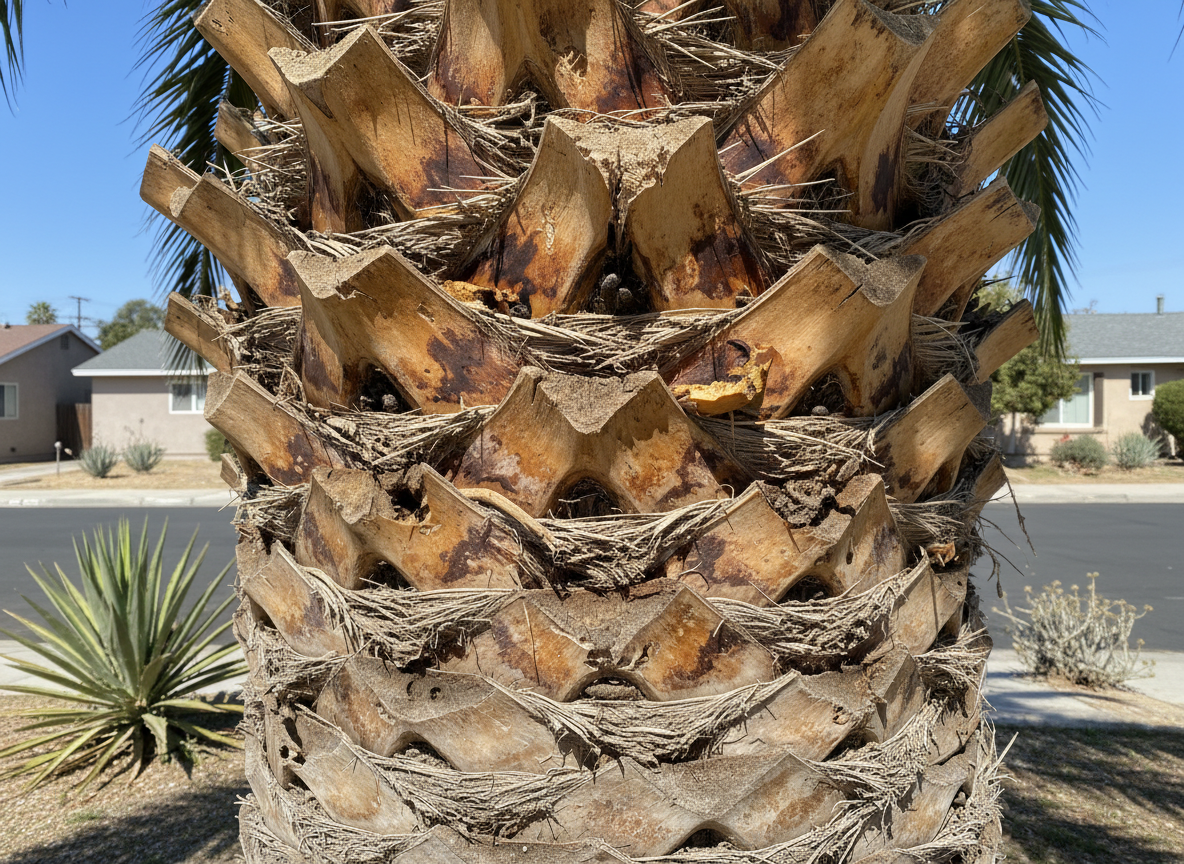
Roof rats leave visible droppings about 1/2 inch long with pointed ends near the base of palm trees in Los Angeles neighborhoods such as Hollywood and Santa Monica, along with shredded frond debris and occasional gnaw marks on the trunks.
Palm Tree Habitat Preferences
Los Angeles palm trees provide ideal shelter for roof rats because their dense fronds stay elevated and protected from ground predators while offering easy access to nearby food sources. In areas like Westwood and Silver Lake, older housing stock with mature palms planted decades ago creates continuous canopy routes that let rats travel between properties without touching the ground. The region's Mediterranean climate with mild winters and warm dry summers keeps fronds viable nesting spots throughout the year instead of forcing seasonal relocation. East Los Angeles and Boyle Heights see similar patterns where dense urban vegetation meets single-family homes built before 1950. Roof rats favor Washingtonia and Phoenix species common along streets near the Hollywood Sign and Griffith Observatory because the leaf bases trap moisture and debris for insulation. These conditions differ from drier inland spots near Pasadena or Glendale where fewer palms limit such nesting opportunities.
Key Signs to Inspect
Check for rice-sized droppings clustered on sidewalks or driveways directly beneath palm crowns, especially after evening activity when rats forage for fruit or bird seed. Look for 1/4-inch wide gnaw marks on the trunk or lower fronds where rats sharpen teeth or create entry points into the thatch. Fresh nests appear as woven balls of shredded palm fiber tucked against the trunk, often 10 to 20 feet up, and may contain shredded insulation from nearby homes in Koreatown or Echo Park. Listen for scratching or scurrying sounds at dusk in trees lining streets near Dodger Stadium or the Getty Center. Urine stains on lower fronds or sidewalks show up as dark streaks that attract ants, a secondary indicator common in Venice and Santa Monica where irrigation keeps soil moist. These signs appear more frequently during summer when dry conditions push rats toward reliable water sources in residential yards.
Seasonal Patterns in Los Angeles
Mild winters allow roof rats to remain active in palm trees without deep hibernation, so droppings and gnaw evidence accumulate steadily from November through February in neighborhoods like South Central and Watts. Warm dry summers increase foraging pressure as natural food sources dwindle, pushing more activity into palms near Universal Studios and Los Angeles City Hall where restaurant waste and bird feeders provide steady calories. After heavy rains, displaced rats from ground burrows move higher into fronds, creating sudden spikes in visible signs along streets in Downtown and East Los Angeles. Property owners in Glendale and Burbank notice similar upticks when nearby construction disturbs established colonies. Regular monthly checks during these transitions help catch infestations before rats move into attics or wall voids of older homes.
For targeted inspection or removal steps suited to Los Angeles conditions, review Roof Rodent Control and Rodent Removal. Additional guidance on protecting older properties appears in Rodent Proofing Older Homes In Los Angeles Neighborhoods. California Rodent Control Pros maintains hours Monday through Friday 8am to 6pm and Saturday 9am to 2pm for service calls across these neighborhoods.